
Sesamoiditis
- Dr. Abbie Clinics
- August 26, 2019
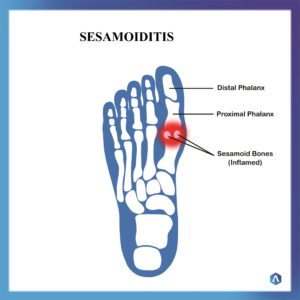
Sesamoiditis is common in athletes, gymnasts and dancers, caused by overuse of the tendons attached to the sesamoid bones, which are the two small bones located under the big toe in each foot. Unlike most bones, sesamoids connect to muscles via tendons rather than joints, and sesamoiditis occurs when these tendons become inflamed.
What Causes Sesamoiditis?
Repeated trauma such as wearing high heels or badly fitting shoes can inflame the sesamoid tendons. Excessive pronation, along with a condition where the first metatarsal sits lower than the others (plantarflexed first ray), can also place extra stress on the sesamoids.
Symptoms
- Pain in the ball of the foot, near the big toe
- Swelling under the foot
- Difficulty bending or straightening the big toe
- A popping sensation in the big toe when walking
Assessment
A physical exam, often as part of a broader biomechanical assessment, helps confirm sesamoiditis. Imaging such as X-ray, CT, ultrasound or MRI may be recommended to rule out a fracture.
- Treatment Options We Offer
- Rest, ice and activity monitoring
- Footwear guidance
- Custom orthotics: designed to take pressure off the affected area
- Foot mobilisation and dry needling
- Strapping: to support the area and offload pressure from the point of inflammation
Frequently Asked Questions
Is sesamoiditis the same as a stress fracture?
Not necessarily, though the symptoms can overlap; imaging is sometimes used to rule out a fracture as part of assessment.
Book an Assessment
Book a biomechanical assessment at your nearest Dr Abbie Clinics location.