Scoliosis (Children and Teenagers)
- Dr. Abbie Clinics
- August 26, 2019
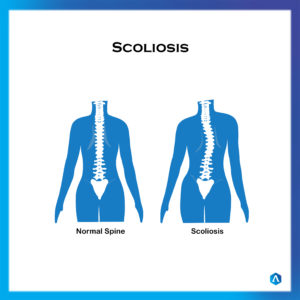
Scoliosis, a curvature of the spine, can develop at any age, but is most common in children and teenagers. The exact cause isn’t always well understood, but a number of contributing factors are commonly considered, and early diagnosis is important for getting the best outcomes.
Possible Contributing Factors
- Poor posture
- A shorter structural leg length
- Pelvic twist
- Muscle imbalance
- Hypermobility or ligament laxity
- Activity that uses only one side of the body, such as certain sports
- Biomechanical anomalies, such as one foot pronating more than the other
Signs to Watch For
- Uneven shoulders or waist
- One shoulder blade more prominent than the other
- A visible curvature of the spine
- Noticeably poor posture
- Back pain and discomfort
- Foot, hip, knee or leg pain
Other signs can include a foot pronating more to compensate, one leg appearing knock-kneed, or one leg bending while the other stays straight when standing, all of which may reflect the body compensating for the curvature.
Assessment
To help confirm scoliosis, we provide a full biomechanical assessment to identify any structural issues. To confirm findings and identify whether differences are structural or functional, a referral for an EOS, X-ray, CT scan or MRI may be provided. This also helps establish the magnitude of the curvature, so the appropriate treatment, if any, can be recommended. If you’ve come to us directly, we can facilitate a referral to an orthopaedic surgeon via your GP where needed, with follow-up support during rehabilitation. Early diagnosis is important for the best outcomes.
Treatment
In most cases, scoliosis is mild and may need no further investigation or treatment beyond monitoring. If more significant, regular check-ups are generally recommended before any treatment is prescribed. Depending on severity, options can range from a supportive brace to improve posture, through to surgical correction in more significant cases, though surgery is considered a last resort, and the choice of treatment depends on severity and age.
Frequently Asked Questions
Does every case of scoliosis need treatment?
No. Many cases are mild and may only require monitoring over time. An assessment can help determine the severity and whether further treatment is needed.
Can foot mechanics really be linked to scoliosis?
In some cases, yes, biomechanical anomalies such as uneven pronation or a leg length difference can be a contributing factor, or can develop as the body compensates for the spinal curvature, which is why a biomechanical assessment forms part of a thorough evaluation.
Book an Assessment
If you’ve noticed signs of scoliosis in your child, book a biomechanical assessment at your nearest Dr Abbie Clinics location.