
Short Leg Syndrome
- Dr. Abbie Clinics
- September 16, 2019
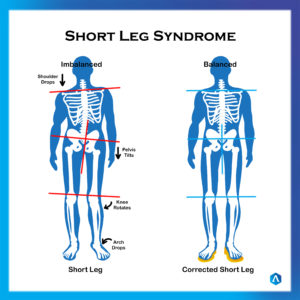
Short Leg Syndrome occurs when a difference in leg length leads to chronic pain. It’s a commonly under-recognised condition. Even a small discrepancy of only a few millimetres, if left unaddressed, can over time set off a wider chain of symptoms throughout the body, as the pelvis tilts to compensate.
Symptoms
Symptoms commonly include leg, hip, foot, knee and/or back pain, sometimes just one or two of these, sometimes several together. In more significant cases, a limp may be noticeable. If the discrepancy is subtle, pain may be marginal at first but tends to progress if left untreated. Short Leg Syndrome can also be a contributing factor in scoliosis, so it’s worth investigating alongside spinal symptoms.
Assessment
Our NBA Biomechanical Assessment is designed to help determine whether a leg length difference is present and how it may be affecting your gait, posture and overall wellbeing. Further confirmation via X-ray or MRI may be recommended where needed.
Treatment Options We Offer
There are several approaches to managing Short Leg Syndrome, depending on cause and severity, including addressing the underlying anomaly directly or intervening in leg growth where the condition is linked to a growth-related issue in younger patients.
- Custom orthotics designed to support, control and align the foot while helping address the underlying mechanical picture.
Frequently Asked Questions
Does a small leg length difference really matter?
Yes. Even differences as small as a few millimetres can, over time, contribute to a wider pattern of hip, knee or back symptoms if left unaddressed, which is why early assessment is worthwhile.
Can headaches be linked to leg length differences?
In some cases, postural changes from an uneven pelvis can contribute to tension patterns that extend beyond the back. See our supporting article on headaches and lower back pain for more detail.
Book an Assessment
Book a biomechanical assessment at your nearest Dr Abbie Clinics location