
Orthotic Therapy
- Dr. Abbie Clinics
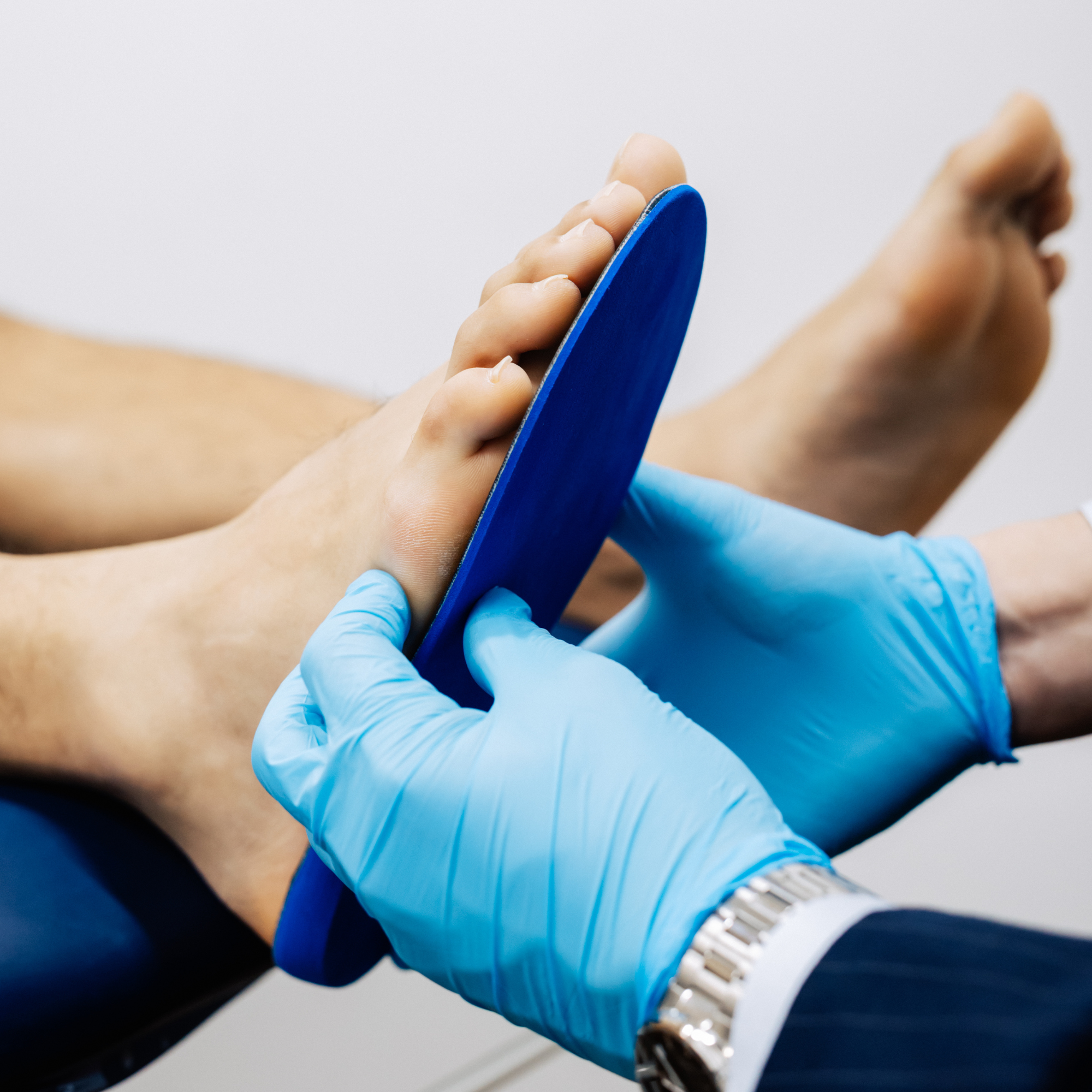
If you’ve been told you need orthotics, you’ve probably also wondered what they actually do beyond sitting in your shoe. It’s a fair question there’s a lot of vague marketing around orthotics, so here’s how we actually think about them.
Officially, an orthotic is defined as a device used to support, align, prevent or correct a deformity, or to modify how a part of the body moves. In plain terms: it’s something that changes the ground you’re walking on, to suit your particular foot.
Think about it like this. If you were walking barefoot on hard, uneven ground all day, your body would be constantly compensating, and that compensation is often where pain starts. An orthotic essentially builds you a better walking surface one shaped to keep your foot in a more neutral position, step after step.
Why we compare them to glasses
We often describe orthotics the same way we’d describe prescription glasses. Glasses don’t fix your eyes; they correct how light reaches them. Orthotics work on a similar principle: they sit between your foot and the ground, correcting the mechanics of each step. And just like glasses, they’re something you need to actually wear consistently for them to help; they’re not a quick fix you use for a week and forget about.
One way we think about the body is as a kind of flow, like water moving through a hose. If the hose kinks somewhere, pressure builds up behind that point. The body works similarly: if a joint is tight, scarred, or restricted somewhere in the chain, it tends to create knock-on pressure elsewhere. Orthotics are one part of managing that flow, but never the whole picture on their own.
No two orthotics are the same
There isn’t really one type of “orthotic.” There are roughly 28 different styles, with up to 150 possible modifications depending on what your foot actually needs. What you get isn’t off-the-shelf; it comes out of your specific assessment.
Where we differ from a lot of clinics is in how we take the cast. Many practitioners cast the foot while a patient is sitting or lying down, but that’s not the position your foot is actually in when it’s doing the work of walking. We cast while you’re standing, with real weight through the foot, because that’s the load-bearing position that actually matters.
To make sure we’re capturing your foot correctly, neither rolling in nor rolling out, we use the Anterior Line Method, a casting technique developed by Dr Abbie Najjarine specifically to get an accurate neutral position before any device is built.
Orthotics don’t work alone
It’s worth being upfront about this: orthotics on their own rarely tell the whole story. They’re generally most effective as part of a broader plan that might include foot mobilisation, dry needling, stretching or strengthening depending on what’s actually driving your particular issue. That combination is usually what determines whether treatment holds up long-term.