
Bunions
- Dr. Abbie Clinics
- December 23, 2019
Bunions form on the joint of the big toe. They may only appear on one foot, and as they develop, they can push against the neighbouring toe and angle the big toe inward, often causing the skin over the joint to become inflamed. Severity varies considerably from person to person.
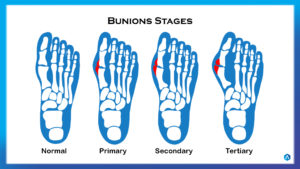
How Bunions Develop
Bunions are largely hereditary the first metatarsal bone is often born shorter than the second, causing it to lean inward for ground contact. With every step, the big toe is then forced further inward by ground reaction force, gradually progressing the alignment change over time.
Bunions generally progress through three stages. The primary stage mostly occurs in adolescents, where a parent may notice a developing deformity or lump. The secondary stage appears roughly between 25–55 years of age, usually as a progression of the primary stage where biomechanical factors haven’t been addressed. The tertiary stage typically occurs in the over-55s; if pain is significant at this stage, surgical referral may be required.
Symptoms
- Regular or intermittent pain at the base of the big toe
- Inflammation around the big toe joint
A visible bump forming on the inside of the big toe base - Other toes crossing over, with restricted big toe movement
- Corns or callouses forming on other toes
Assessment
Our NBA Biomechanical Assessment is designed to help identify imbalances that may be contributing to bunion development, alongside your gait and posture. Further confirmation via X-ray or MRI, and referral to a podiatric or orthopaedic surgeon, may be recommended if severe.
- Treatment Options We Offer
- Footwear guidance ensuring shoes are comfortable and don’t constrict the toes
- Strapping, padding or splinting
- Anti-inflammatory and icing guidance
- Prolotherapy may assist with ligament and joint support, often alongside orthotic devices
- Custom orthotics designed to help take pressure off the affected area
It’s worth noting that conservative treatment can help relieve pain and slow progression but is not a cure for an existing bunion surgical referral remains an option for more advanced, painful cases.
Frequently Asked Questions
Can orthotics fix a bunion?
Orthotics aren’t a cure, but may help slow progression and reduce pressure on the affected joint as part of a broader management plan.
Do I need surgery for a bunion?
Not necessarily this depends on severity and how much pain is affecting your daily life. Conservative options are generally tried first, with surgical referral reserved for more significant cases.
Book an Assessment
Book a biomechanical assessment at your nearest Dr Abbie Clinics location to discuss bunion management options.