






How a neuroma changes over time
It starts as localised pain, then numbness, tingling or pins and needles into the toes. Over time the body forms scar tissue around the nerve to protect it.
Pain in the ball of the foot, including Morton’s neuroma. Often described as standing on a pebble, or burning between the toes.
Trusted by patients from Sydney to Narrabri



If this sounds like your pain, there is a structural reason for it. The assessment is what finds it.
The forefoot takes the highest pressure of any part of the foot at push-off. Pain there usually means pressure is concentrating where it should be spread — through foot alignment, footwear width, or the way load moves across the ball of the foot.
Pain in the ball of the foot falls into two main types. They feel different and have different causes.
Two main types
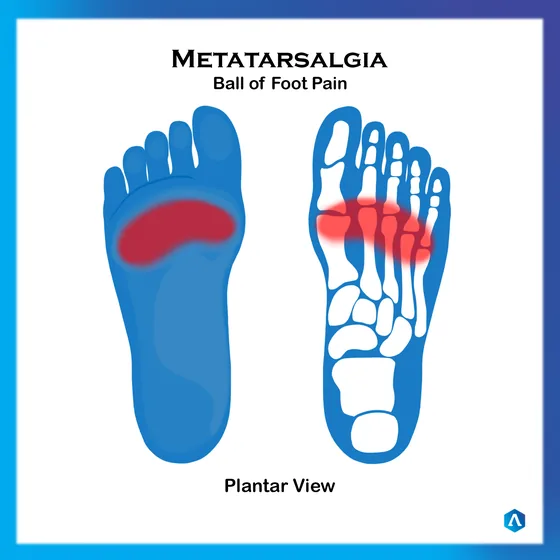
Pain spread across the ball of the foot. As a rolled-in foot lengthens, it creates shearing forces on the long bones’ heads and loses the arch across the forefoot.
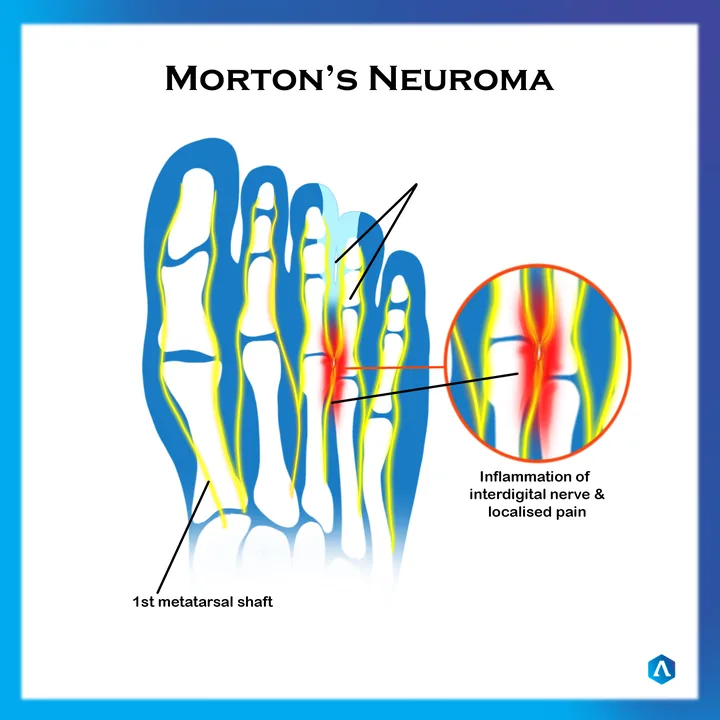
A swelling of the nerve that runs between the metatarsals, the long bones of the foot — usually between the 2nd/3rd or 3rd/4th toes.
It starts as localised pain, then numbness, tingling or pins and needles into the toes. Over time the body forms scar tissue around the nerve to protect it.
A cyst between the toes, bursitis or a torn plantar plate can feel similar. Telling them apart is part of the assessment.
Orthotics with a metatarsal dome, which supports the arch across the forefoot, dry needling, foot mobilisation and massage.
Forefoot Pain is diagnosed with the Najjarine Biomechanical Assessment, so treatment is prescribed against a finding rather than a symptom.
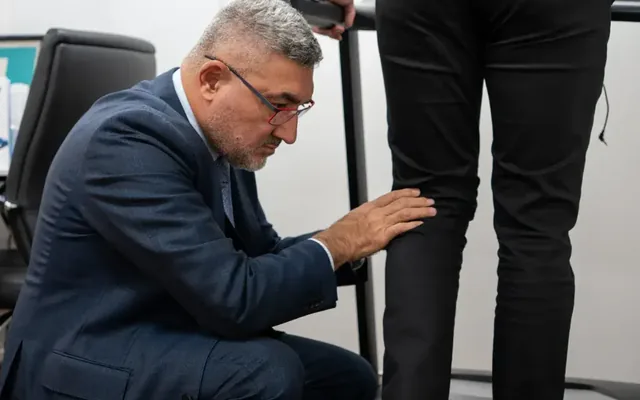
We assess where pressure is concentrating across the forefoot as you walk.
We work out whether the problem is mechanical, footwear, or both, and explain what we found.
Treatment is aimed at redistributing that pressure rather than only settling the symptom.
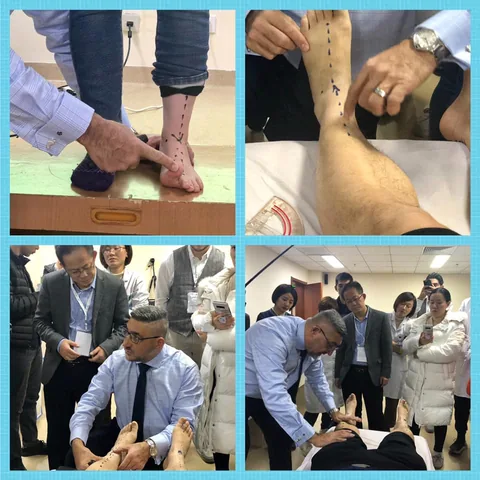
All ten treatments, starting with those most often used for forefoot pain. Which you need is decided at the assessment; most plans combine more than one.
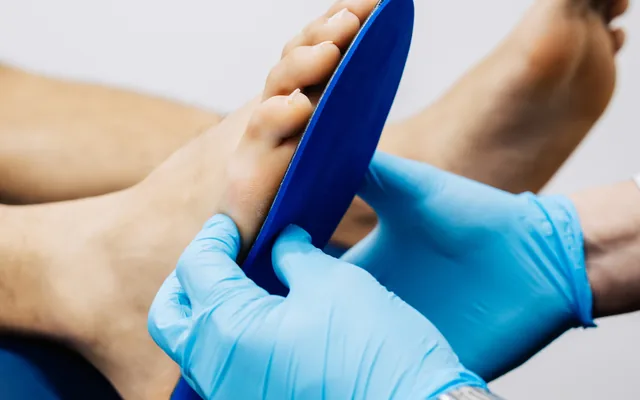
Prescribed devices that change how your foot meets the ground. Manufactured on site at our Kirrawee head office.
Read more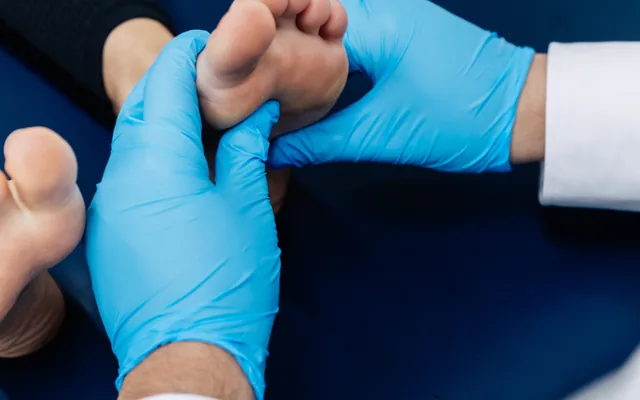
Hands-on work addressing restrictions across the foot’s 26 bones.
Read more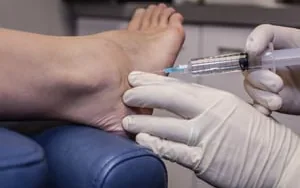
Injectable therapy to stimulate a repair response. Paired with prolotherapy.
Read more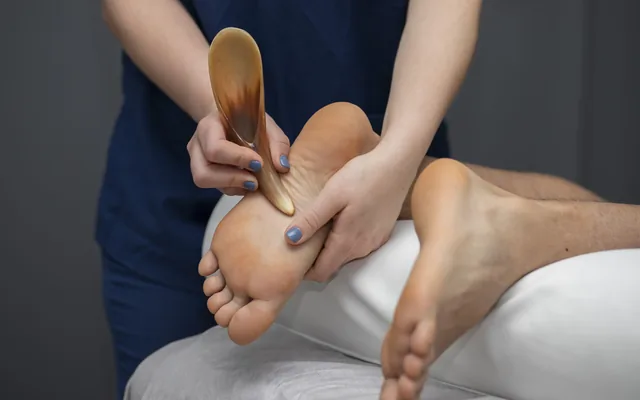
Routine care including ingrown toenails, corns and calluses.
Read more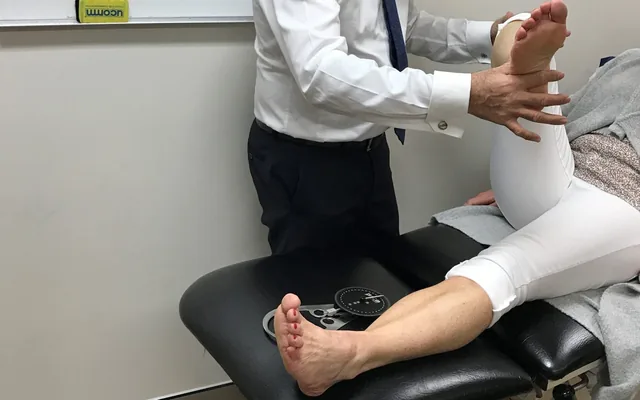
A full lower limb assessment from the feet up. It is the foundation of every treatment plan we prescribe.
Read more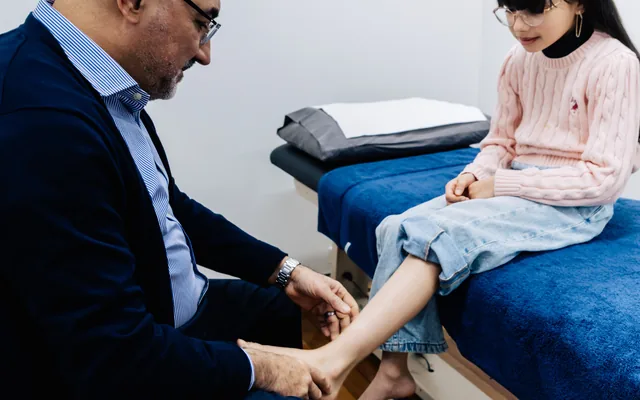
Pigeon toe, flat feet and growing pains, assessed while the foot is still developing.
Read more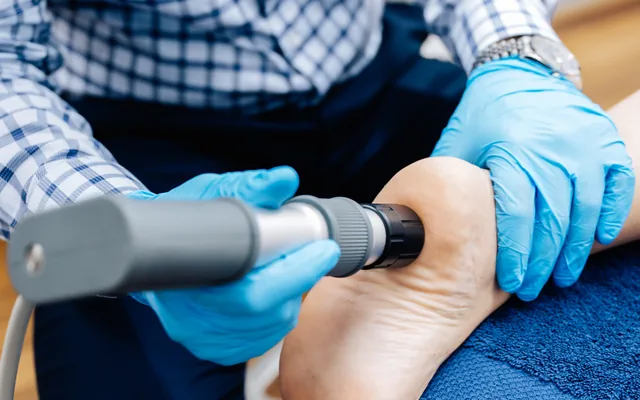
Acoustic waves using kinetic energy to stimulate repair in tendon and soft tissue. We use it most often for persistent heel pain and Achilles pain.
Read more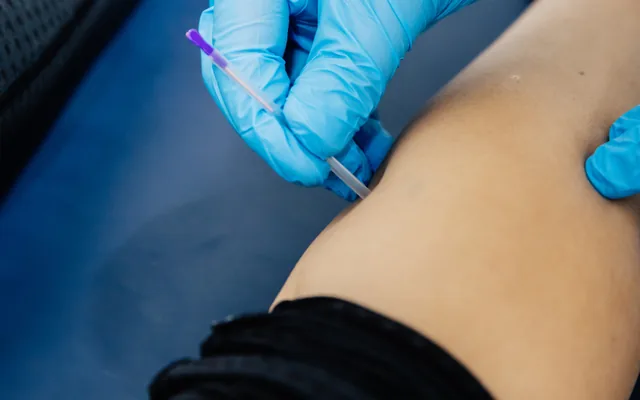
Fine needles inserted into trigger points to break down restrictive tissue.
Read more
Running injuries, return to sport, and footwear that matches your gait.
Read more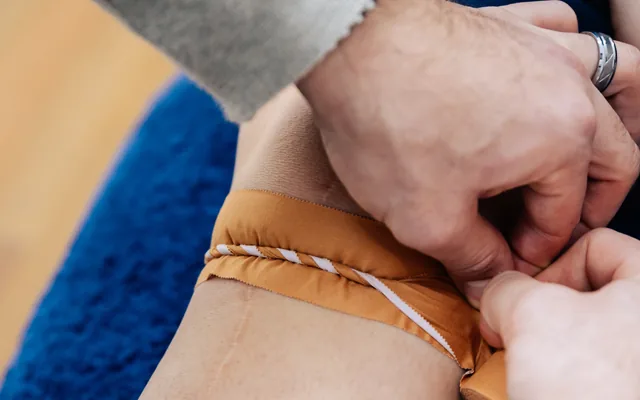
Therapeutic support to offload tissue while it recovers.
Read moreEvery clinic books into its own diary. Choose the one nearest you.

The pebble feeling is exactly how I described it and they knew straight away what I meant.
Wider shoes plus an orthotic. Simple once someone actually looked.
Explained what the neuroma was rather than just giving it a name.
A thickening of tissue around a nerve between the metatarsals, which is why the pain often burns or runs into the toes rather than staying in one spot.
Footwear is often part of it, particularly width. Bring the shoes you wear most to your appointment.
Most forefoot pain is managed without it. That conversation only arises if conservative treatment has not worked.
That depends on what is driving the pressure. You will get a realistic timeframe at the assessment.
No. You can book directly.
Treating lower limb pain since 1990
Choose your clinic and book straight into its diary, or call and we will point you to the right practitioner.