










Dr. Abbie Clinics

Pigeon Toe

In-toeing in children, where the feet point inwards when walking or running. Common, and worth measuring rather than waiting out.

  • Assessed as they grow
  • Children seen at every clinic
  • About 45 minutes
  • Nine NSW clinics

Trusted by patients from Sydney to Narrabri

Podiatry NSW/ACT American Academy of Podiatric Sports Medicine (AAPSM) Sports Medicine Australia AHPRA — Australian Health Practitioner Regulation Agency
What you notice

Symptomsand causes

If this sounds like your pain, there is a structural reason for it. The assessment is what finds it.

Common symptoms

  • Feet that turn inwards when walking or running
  • Tripping more than other children the same age
  • A twisting appearance from the knee or the hip down
  • Complaints of tired or sore legs after activity

What causes it

In-toeing can come from the foot, the shin or the hip, and which one it is matters because they behave differently as a child grows. Where the shin bone itself is twisted inwards, the body often hides it by tightening the hip muscles rather than correcting it, so it can look better while the twist is still there.

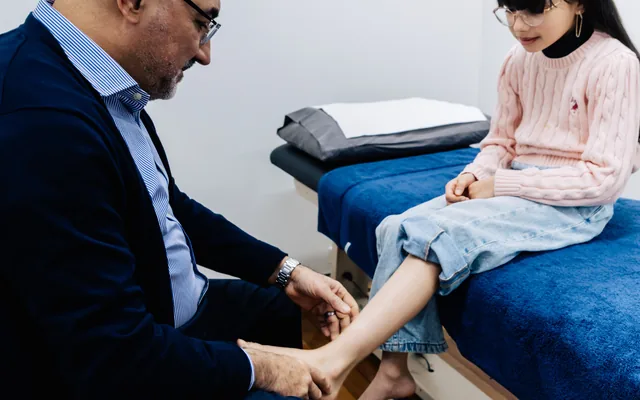
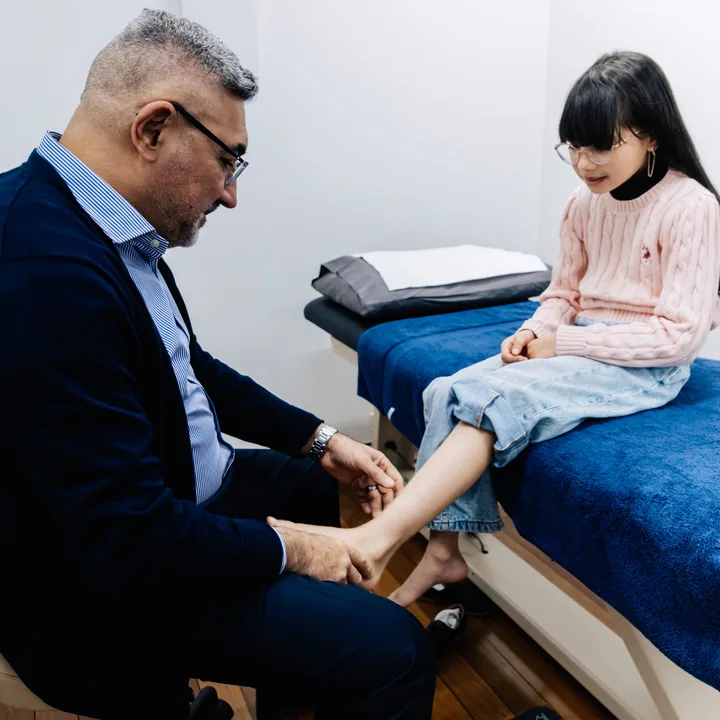
Dr Abbie Najjarine examining a child’s feet
In detail

Understandingpigeon toe

Pigeon toe often comes from the shin bone being twisted inwards, called internal tibial torsion. It is often inherited, passed down from a parent.

A young child walking on the sand

The measurements behind it

13–18° from age 6

Shin angle

Measured at the ankle, a healthy shin turns slightly outwards. A negative angle means it turns in.

45° each way

Hip rotation

Ideally the hip turns equally in and out. Tight outer hip muscles show the body is compensating.

0–4°

Heel position

A twisted shin often makes the feet roll in as well.

"They’ll grow out of it"

The in-toeing you can see often lessens. But where it comes from the shin, the body usually hides it rather than correcting it: the hip muscles tighten to turn the leg back out. That is why it is worth assessing rather than waiting.
How it shows up later

With the shin turning in below the knee and the thigh turning out above it, the knee is caught in the middle. In adults this is linked to knee pain.

What a plan can include

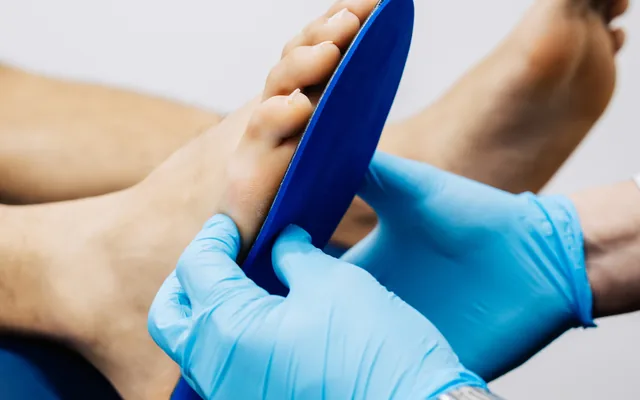
Monitoring as your child grows, stretches for the hip muscles that have tightened to compensate, orthotics where the feet roll in, and regular re-measurement. See children’s podiatry.

How we diagnose it

The cause,not the sore spot

Pigeon Toe is diagnosed with the Najjarine Biomechanical Assessment, so treatment is prescribed against a finding rather than a symptom.

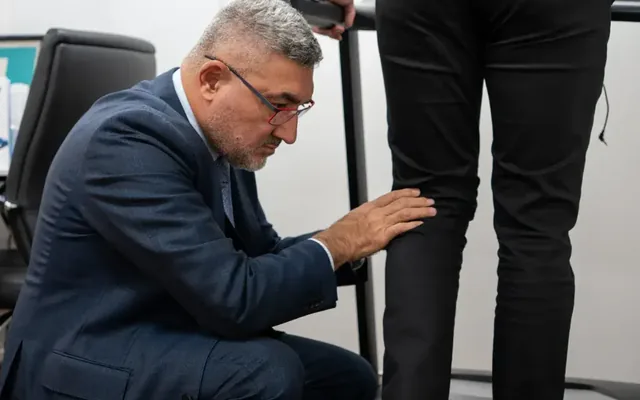
Dr Abbie Najjarine assessing a patient’s gait on a treadmill
01

Assess

We assess how your child stands, walks and runs, and compare that against what is expected for their age.

02

Diagnose

We work out which level the rotation is coming from and explain it in plain terms.

03

Treat

Where nothing needs doing we will say so and set a review. Where it does, treatment is staged around growth.

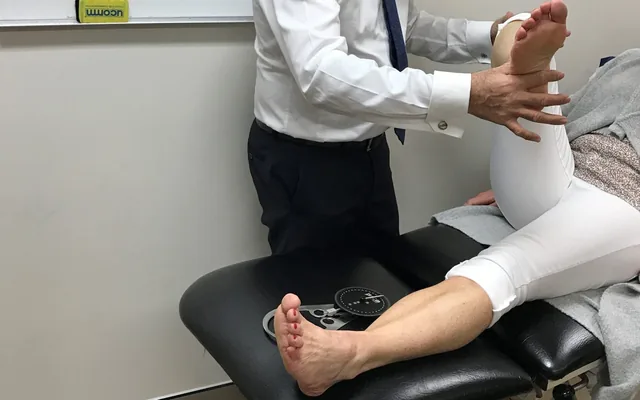
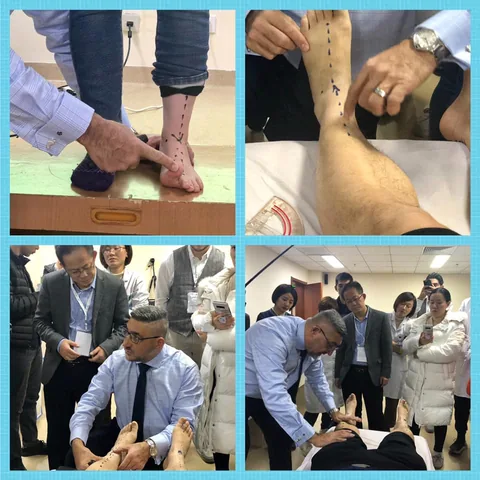
Dr Abbie Najjarine demonstrating a lower limb assessment, with alignment marked on the leg and practitioners observing
Start here

Book an assessment

Find out what is actually causing your pigeon toe.

Patient feedback

What patients sayabout pigeon toe

Google 4.9 Based on 286 Google reviews across our clinics
Nadia H. Dr. Abbie Clinics · 2 weeks ago Google

Explained what was expected for his age and what to watch for. No pressure to treat.

Jason B. Dr. Abbie Clinics · 1 month ago Google

Patient and kind with my daughter, who was nervous walking in.

Kate M. Dr. Abbie Clinics · 2 months ago Google

Told us to come back in six months rather than selling us something.

Questions

Pigeon Toequestions

The in-toeing you can see often lessens. But where it comes from a twist in the shin bone, Dr Najjarine’s clinical view is that the body usually compensates at the hips rather than the twist resolving. That is the reason to have it measured rather than waiting to find out.

There is no fixed age. If you have noticed it or your child is complaining of pain, that is the time.

Usually not on their own. The assessment establishes whether anything is worth doing at all.

It can be. That is one of the things we check rather than assume.

No. You can book directly.

Treating lower limb pain since 1990

Book yourassessment

Choose your clinic and book straight into its diary, or call and we will point you to the right practitioner.