
In short
- First-step pain happens because the tissue under the heel tightens overnight and is loaded suddenly when you stand.
- Plantar fasciitis is a common cause, but not the only one, and a heel spur is often not the source of the pain.
- Rest alone tends to help only while you are resting. Finding what is overloading the heel is what changes it.
- Heel pain after an injury, with swelling, heat or numbness, should be seen promptly rather than waited out.
If the first few steps out of bed feel like standing on a bruise, or a sharp point under the heel, you are describing one of the most common problems a podiatrist sees. It often eases as you move around, which makes it easy to ignore, and then returns after sitting down or at the end of a long day.
Why the first steps hurt the most
The tissue under your foot does not carry load while you sleep, so it shortens and stiffens overnight. When you stand, it is stretched and loaded all at once. If that tissue is already irritated, those first steps are where you feel it most.
As you keep walking the tissue warms up and the pain often settles, which is why so many people describe it as “fine once I get going.” That pattern is useful: it points towards a loading problem rather than a sudden injury.
What usually causes it
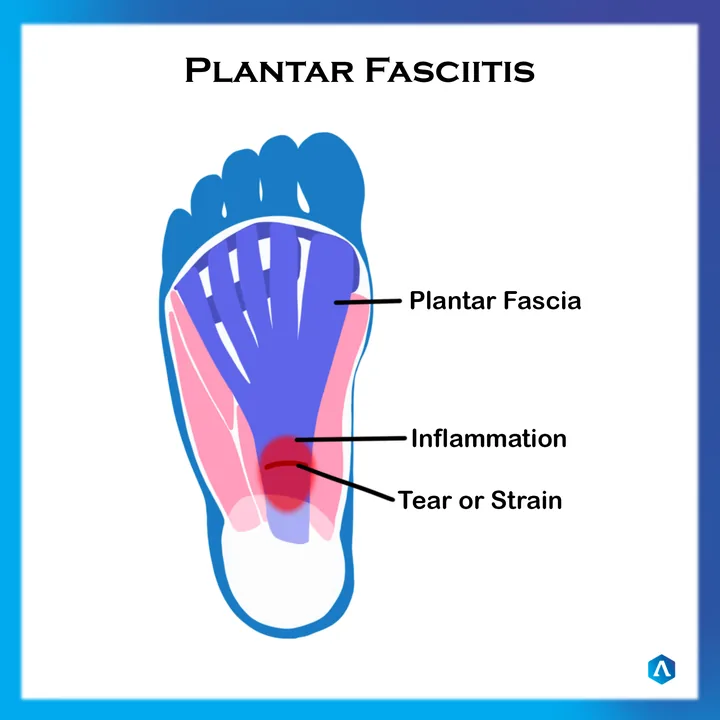
Plantar fasciitis is the cause most people have heard of. The plantar fascia is a thick band of tissue running along the sole from the heel to the toes, and it takes load every time you push off. When it is loaded more, or differently, than it can tolerate, the attachment at the heel becomes painful.
It is not the only cause of heel pain, though. Pain at the back of the heel rather than underneath it often involves the Achilles tendon. Irritated nerves can produce burning or tingling. In active children, heel pain is commonly linked to the growth plate at the back of the heel. Each of these is managed differently, which is why the location and pattern of the pain matter.
Behind most of them sits the same question: why is the heel taking more load than it can cope with? Common contributors include:
- the way the foot is aligned and rolls as you walk
- a change in activity, such as more walking, running or standing at work
- footwear that is worn, flat or unsupportive, or a lot of time barefoot on hard floors
- tightness or weakness further up the leg changing how the foot is loaded
Is a heel spur causing the pain?
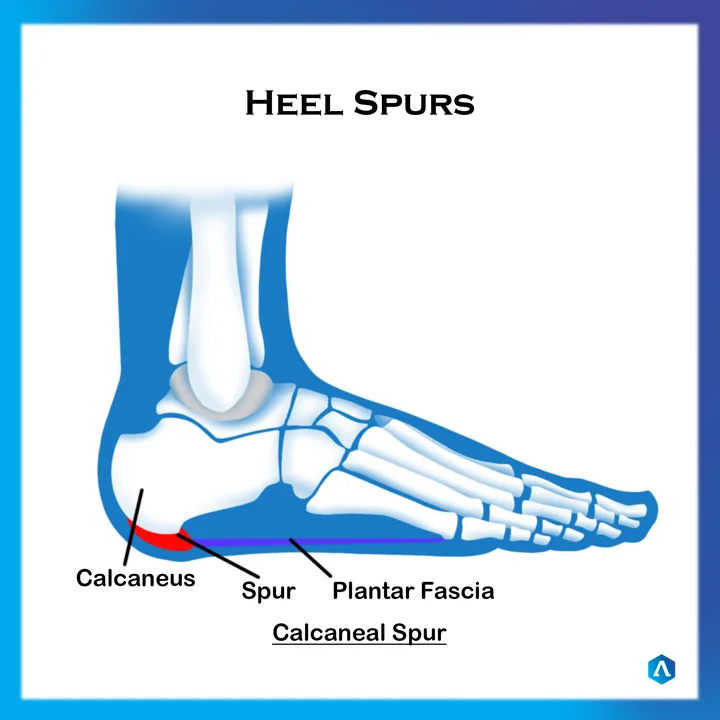
Often not. A heel spur is a small bony growth that can show up on an X-ray, and it is easy to assume that is what hurts. But spurs appear in plenty of people who have no pain at all, and many people with heel pain have no spur. A spur is frequently a result of long-term loading at the heel rather than the source of the pain, so treatment is aimed at the loading, not the spur.
What you can do in the meantime
While you are waiting for an appointment, a few general measures are reasonable for most people:
- avoid walking barefoot on hard floors, especially first thing in the morning
- wear supportive shoes rather than flat, worn-out or very soft ones
- notice what makes it worse, such as a particular activity, shoe or surface, and bring that to your appointment
- ease back on the activity that flares it rather than pushing through sharp pain
These can take the edge off. What they do not do is change the reason the heel is overloaded, which is why pain that settles with rest so often comes back when normal activity resumes.
How we assess and treat it
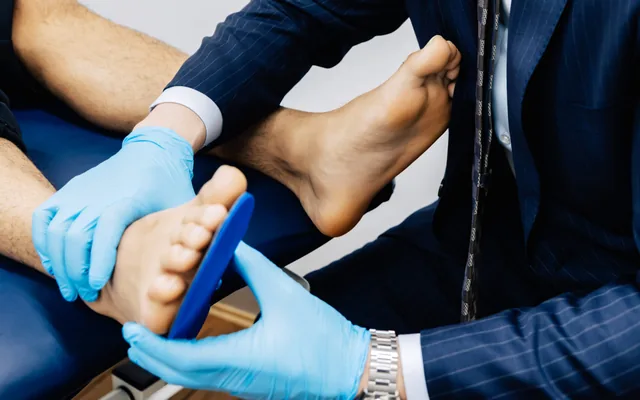
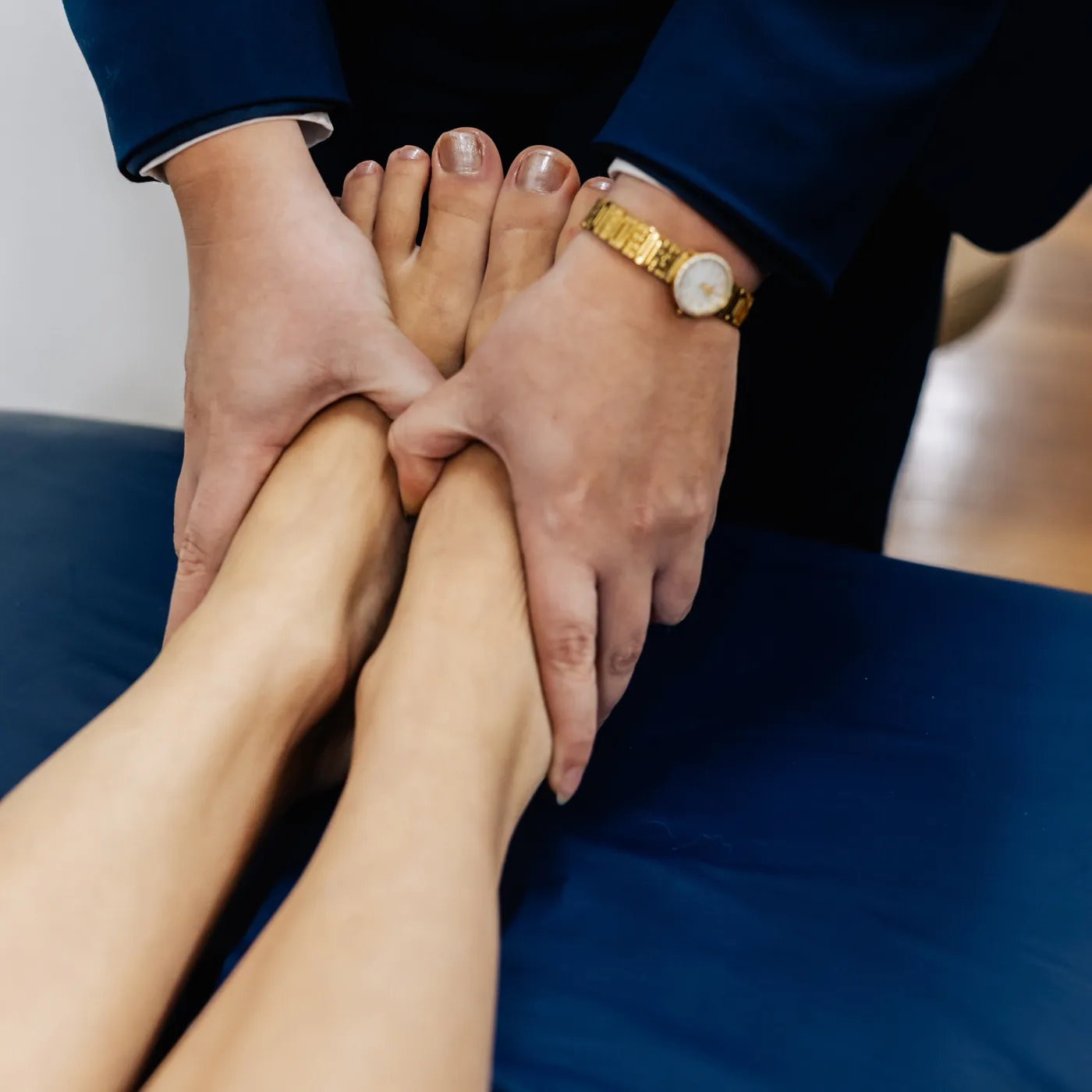
Pressing on the sore spot confirms where it hurts. It does not tell you why. At Dr. Abbie Clinics, heel pain is assessed with the Najjarine Biomechanical Assessment, which looks at how you stand, walk and load from the feet up, so treatment is prescribed against a finding rather than a symptom.
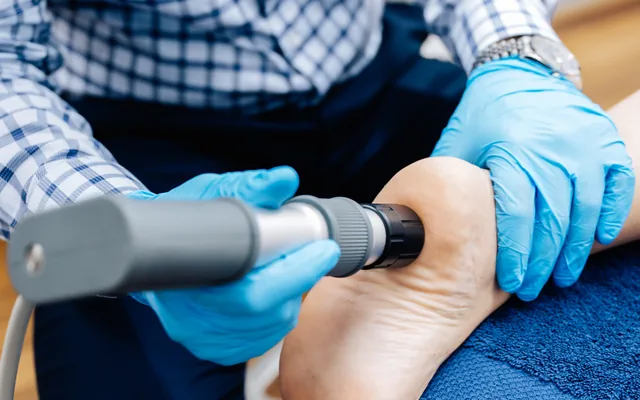
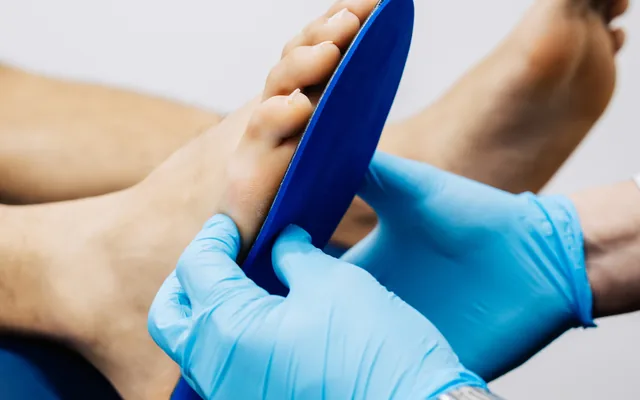
Depending on what the assessment shows, a plan may include custom orthotics to change how load passes through the foot, strapping to offload the tissue in the short term, foot mobilisation, footwear changes, or shockwave therapy for pain that has persisted. Most plans combine more than one, and two people with the same heel pain can leave with different plans.
When to book an assessment
It is worth having heel pain looked at if it has not settled within a few weeks, if it keeps coming back, or if it is changing the way you walk. Pain that has been there for months is not something you simply have to live with.
This article is general information, not a diagnosis. Everyone’s situation is different, so if you have pain or a concern about your feet or legs, have it assessed by a health professional.