
In short
- Shockwave delivers pulses of acoustic energy to tissue that has stopped settling on its own.
- It is usually considered for heel or Achilles pain that has persisted despite rest, footwear changes and load management.
- A session takes a few minutes, needs no anaesthetic, and most people describe it as uncomfortable rather than painful.
- It is rarely used alone. The assessment decides whether it suits you and what needs to be addressed alongside it.
If your heel or Achilles pain has hung around for months despite rest, new shoes and doing everything you were told, shockwave therapy may have come up as an option. Here is what it involves, so you know what to expect before you decide.
What shockwave therapy is
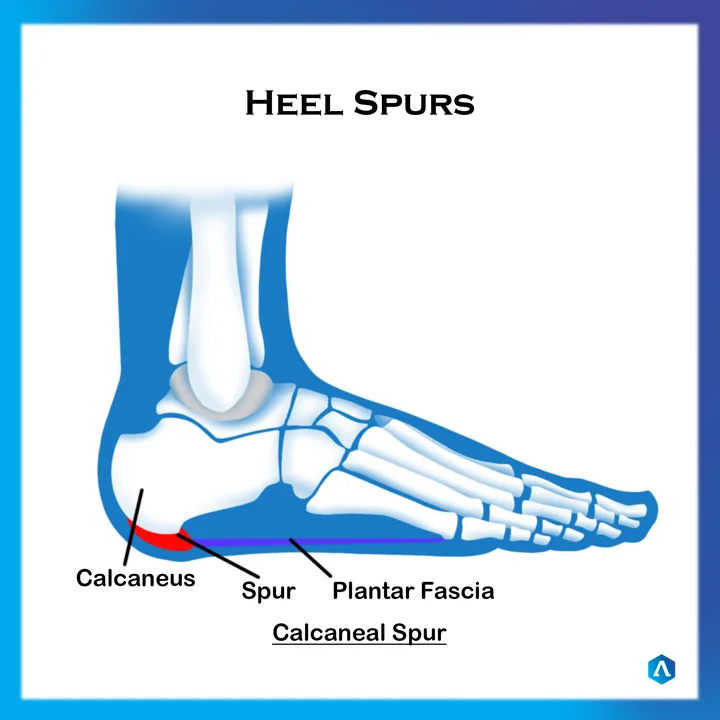
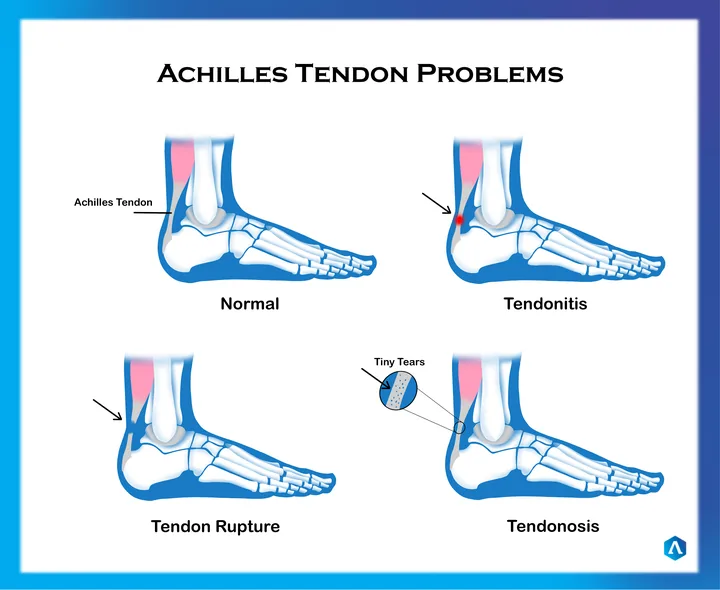
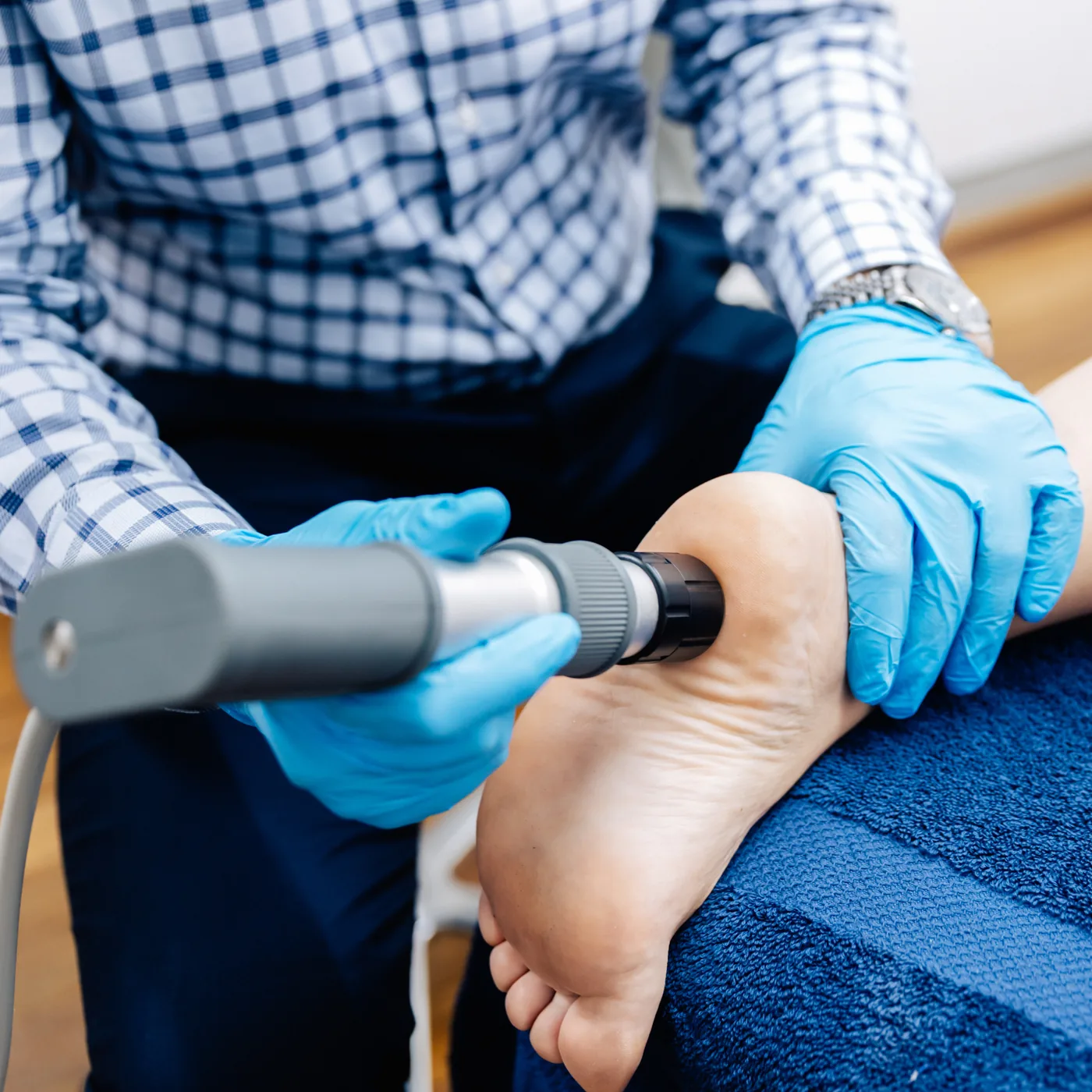
Shockwave therapy delivers pulses of acoustic energy through the skin to the tissue underneath, using a handheld applicator. The intention is to provoke the body’s own repair response in tissue that has stopped settling on its own, such as a long-standing irritation where the plantar fascia attaches to the heel, or in the Achilles tendon.
Despite the name, it has nothing to do with electric shocks. The “shockwave” is a pressure wave, and what you feel is a rapid tapping.
Who it is usually considered for
Shockwave is most often considered for pain that has persisted despite the usual first steps: relative rest, footwear changes and managing load. At Dr. Abbie Clinics we use it most often for persistent heel pain, including plantar fasciitis, and Achilles pain.
It is not a first resort, and it is not suitable for everyone. Before recommending it, your podiatrist will ask about your medical history, any medications you take, and whether you are or could be pregnant.
Before: the assessment comes first
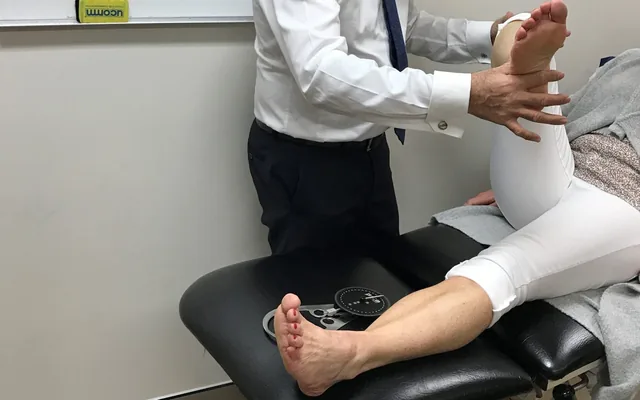
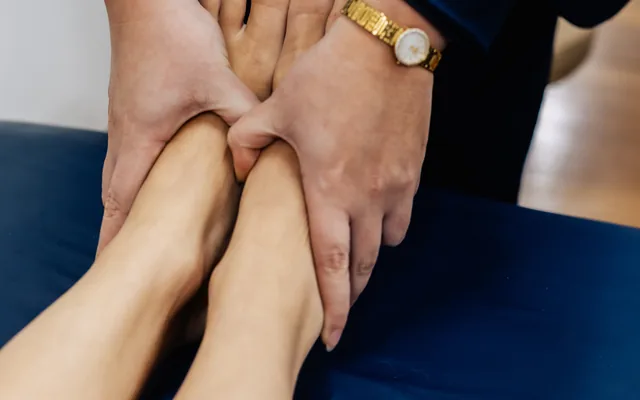
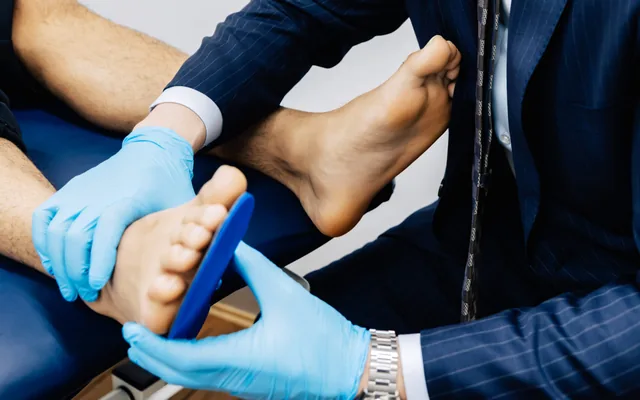
Shockwave treats the painful tissue. It does not change why that tissue was overloaded in the first place. So before shockwave is considered, a full biomechanical assessment establishes what is loading the heel or tendon and why. That finding decides whether shockwave is appropriate, and what else the plan needs.
During a session
- You lie or sit comfortably with the foot supported.
- A gel is applied to the skin, and the applicator is worked over the painful area for a few minutes.
- You will feel a strong, rapid tapping. Most patients describe it as uncomfortable rather than painful, and the intensity is adjusted during the session.
- No anaesthetic is used.
After a session
There is no recovery period, so you can walk out and drive straight away. The area can feel tender for a short time afterwards. Your podiatrist will tell you what activity is fine in the days after treatment and what to avoid.
How many sessions?
That depends on how long the problem has been there and how the tissue responds. Your podiatrist will discuss the likely course with you before you commit to it, rather than after.
Why it is rarely used on its own
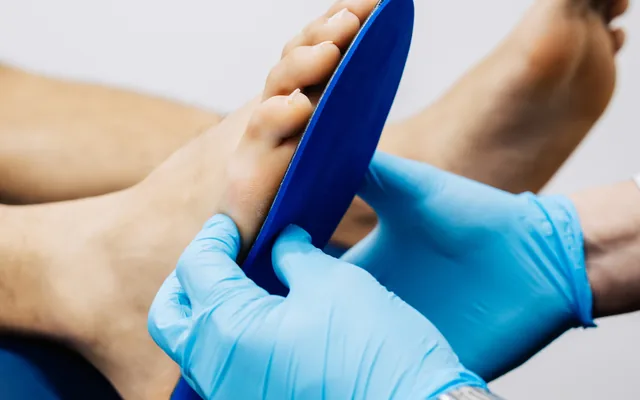
If the reason your heel or tendon was overloaded is still there, the pain has every chance of returning. That is why shockwave is normally paired with something that addresses the cause, such as custom orthotics, footwear changes or a loading programme for the tendon.
Is it right for you?
That is decided at the assessment, not before. If your pain has been going on for a while and has not responded to the usual measures, it is worth asking about. Shockwave is available at selected clinics, so call the clinic nearest you before booking if it is the treatment you are after.
This article is general information, not a diagnosis. Everyone’s situation is different, so if you have pain or a concern about your feet or legs, have it assessed by a health professional.